
Pressure-mounted baby gates, fitted properly
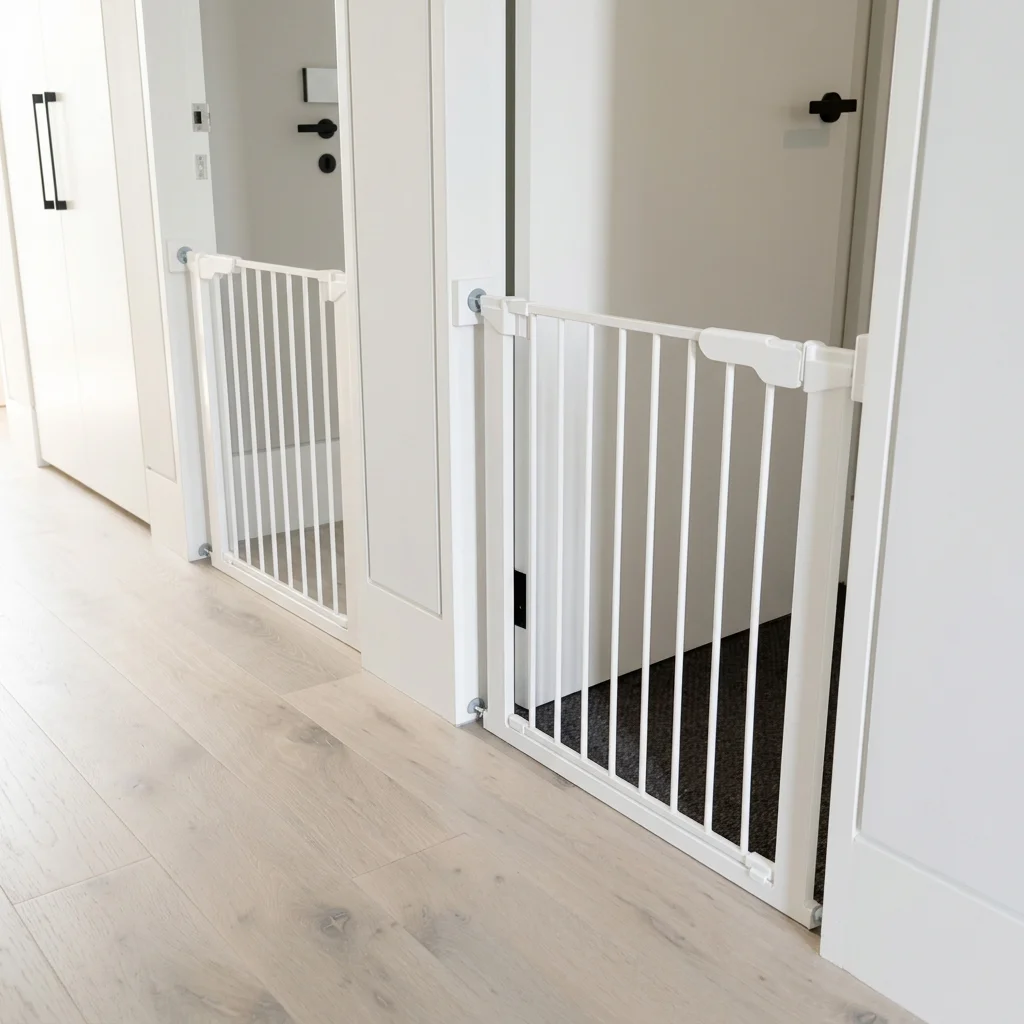
For openings between two solid walls, we fit pressure-mounted gates with spacer blocks, so they sit stable, protect your walls and can be moved and refitted.

Metro Melbourne
Baby gate installation by our team: measured, customised and professionally installed.

Interstate
Custom baby gates for stairs Australia-wide, made to fit in our factory with clear self-installation instructions.

International
Customised in our factory and shipped overseas, ready to self-install.

How we fit them
A pressure gate is only as good as its fitting
Pressure-mounted gates need enough pressure between the pads and the walls to stay stable. Most wobbly pressure gates come down to the fitting, not the gate.
Spacer blocks at the top
Skirting boards make the gap wider at the top than the bottom, which over-extends the top pads. Our spacer blocks even out the span so the top pads press properly.

Moves when you do
Spacer blocks protect your walls and let the gate come out and go back into the same spot safely.

Locked into position
Pressure gates must be locked in with their proper cups. Adhesive pads, or screws that don't reach the frame behind the plasterboard, aren't safe

Pressure-mounted examples
Pressure-mounted gates we've fitted
Each one fitted with spacer blocks to suit the opening.


Getting it right
Where pressure gates don't belong
A pressure gate in the wrong place can create more danger than it prevents. These are the rules we never break:

Never against glass
Even toughened glass at least 10mm thick is put under stress by constant pressure, and any impact could shatter it. We use custom fixings instead.

Keep base rails back from the stairs
A gate with a base rail should sit at least 40cm back from the top of the stairs, so a caught heel doesn't send someone toward the drop.

Never on an unsupported newel post
An unsupported post can bend under constant pressure and, in the worst case, need major structural repair.

Use a manual latch, not self-closing
Self-closing springs need frequent tuning and wear with daily use. Manual operation is the only failsafe way to know the gate is latched.
Questions
Pressure-mounted gate FAQs
Straight answers to what parents ask us most.
-
It's a gate held in place by pressure between two solid walls, instead of being fixed with screws or clamps.
-
Skirting boards make the opening wider at the top than the bottom, so the top pads can't press properly and the gate becomes unstable. Spacer blocks even out the span, protect your walls, and let the gate be removed and refitted in the same spot.
-
Never against glass, and never on an unsupported newel post. For those spaces we use custom fixings, clamps and brackets instead.
-
The pressure-mounted gates we fit suit openings with a maximum span of up to 120 cm.
-
White or black, in both heights.
-
Every gate comes in two heights: 71 cm and 104 cm. The taller 104 cm gate suits older toddlers who have started climbing, and pets that can jump. Both heights come in white or black.
-
No. Fill in our short enquiry form and send three photos of the area. For installations in Melbourne, we quote from your photos and our team does all the measuring. If your gate is being delivered, we mark up your photos with the few measurements we need, then quote as soon as they're in.
-
We install across metro Melbourne. Interstate and overseas, we customise your gate in our factory and deliver it with clear self-installation instructions.